The Cobbler's Children Problem: Why Agencies Struggle to Grow Their Own Pipelines
79% of agencies have no dedicated BD resource. Learn why agencies that build pipeline for clients struggle to grow their own, and what the other 21% figured out.
The Cobbler's Children Problem: Why Agencies Struggle to Grow Their Own Pipelines
You build pipeline infrastructure for your clients. You understand outbound. You can architect a campaign, map ICPs, write sequences, and measure conversion rates. You do this for a living.
And when someone asks how you find your own clients, the answer is: referrals. Maybe a LinkedIn post that gets some traction. Maybe a former client who happens to mention you at the right dinner.
This is the cobbler's children problem. The professionals best equipped to build their own acquisition systems are the ones who never do.
It's not a skills gap. It's a structural one.
What Is the Cobbler's Children Problem in Agencies?
The cobbler's children problem in agencies is the paradox where firms that build pipeline infrastructure for clients have no acquisition system for themselves. They rely on referrals and founder-led BD because delivery always takes priority. The result: unpredictable revenue, structural client churn, and a growth ceiling set by the founder's personal network.
That pattern plays out across thousands of agencies every quarter. And the data backs it up: 79% of agencies in the $500K to $15M revenue range have no dedicated business development resource (SBA Office of Advocacy, Small Business Profiles, 2024). Not a part-time person. Not a half-measure. Zero dedicated BD infrastructure.
The Math Behind the Feast-or-Famine Cycle
Let's walk through what this looks like in practice.
A 12-person RevOps consultancy finishes a large engagement in March. The founder spent the last three months heads-down in delivery because that's what the client paid for, and that's what keeps the lights on. But during those three months, no one was generating pipeline. No outbound. No proactive conversations. No systematic outreach to the market.
Now it's April. The bench is idle. Revenue is about to drop.
The founder picks up the phone. Calls her network. Posts on LinkedIn. Attends a few events. Maybe reaches out to past clients. Within four to six weeks, something lands. The team gets busy again. Pipeline development stops again. The cycle repeats.
This isn't a one-time blip. Revenue swings of 30-40% quarter over quarter are standard for services firms operating this way (Hinge Research Institute, Professional Services Benchmark Report, 2024). The variance is predictable. The timing is predictable. The pattern is predictable. But 79% of agencies still haven't fixed it because the fix requires capacity they don't have while they're in the middle of the cycle.
Here's the specific math that makes this structural:
Structural client churn every 90 days. Most agency engagements have a natural lifecycle. Clients graduate. Projects wrap. Budgets shift. Even healthy agencies with great retention lose two to three clients per year to normal lifecycle events (Hinge Research Institute, 2024). That's not failure. That's the business model. But without a pipeline system replacing those clients before the gap hits revenue, every departure becomes a crisis.
30%+ of founder time on BD. Founders in referral-dependent agencies spend roughly a third of their working hours on business development instead of billable delivery (BenchPress Agency Growth Survey, 2024). That's not BD by choice. It's BD by necessity, because there's no other system generating conversations.
Team utilization drops between engagements. When pipeline is unpredictable, there's no way to time new work to start as old work finishes. The gap between engagements puts senior people on the bench, which erodes margins and forces agencies to accept bad-fit clients just to keep the team busy.
How Do Agencies Generate Their Own Pipeline?
Agencies that solve the cobbler's children problem share a common trait: they treat their own pipeline as a product, not a side project. Successful agency pipeline generation requires a dedicated system that runs independently of founder time and delivery cycles. This means coordinated outbound, consistent content that builds findability, and signal-based targeting that reaches potential clients during active buying windows, not after they've already chosen a vendor.
The agencies that grow consistently aren't the ones with the best referral networks. They're the ones that built pipeline systems that run whether or not the founder is in delivery mode.
There are three approaches agencies typically consider. Each comes with real trade-offs.
Option 1: Hire a BD Person
This is the most common first move. And for many agencies, it's the wrong one, because it's the wrong order of operations.
A dedicated BD hire costs $60,000 to $80,000 loaded (base plus benefits plus tools) and takes three to six months to ramp. During that ramp, they're learning your market, building their own network, and figuring out what messaging works through trial and error. The agency is paying for pipeline that doesn't exist yet.
The deeper problem: a single person doing outbound with no ad support, no organic content driving inbound, and no signal data telling them who to reach can expect reply rates of 2-3% (Woodpecker Cold Email Benchmarks, 2025). At that rate, the math on ROI is brutal.
Hiring works, but it works better as step two or step three, once you have data on what messaging converts, which signals predict buying windows, and which channels produce meetings that actually close.
Option 2: Build It Yourself with Tools
Most agency founders have evaluated the tool stack approach. Apollo, Clay, Instantly, Lemlist, LinkedIn Sales Navigator, plus an ads platform, plus a CRM, plus a content calendar. Six to eight tools. Months of configuration. Ongoing optimization.
The problem isn't technical complexity. Agency founders are smart enough to learn any of these tools. The problem is time. When the biggest client calls with an urgent request, the outbound sequences stop. The LinkedIn Ads pause. The blog post stays in draft. Every time delivery pulls the founder away, the pipeline system decays. It's the same structural problem dressed up in software.
Option 3: Use an External Partner
Working with a client acquisition partner solves the time constraint. The pipeline runs whether or not the founder is in delivery. But not all partners are built the same.
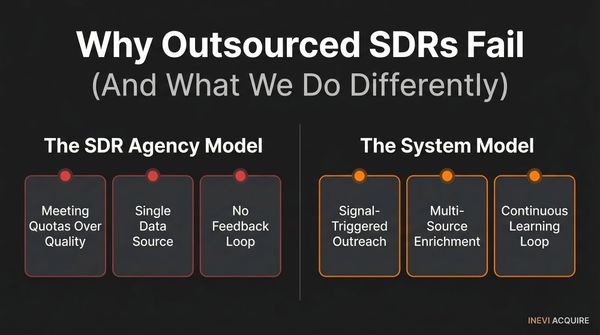
The traditional agency model, where a vendor runs single-channel outbound from a static list, typically produces results for 60 to 90 days before performance degrades. Reply rates start strong and drop as the list gets worked through. There's no optimization loop. There's no coordination between channels. The 73% of B2B buyers who avoid suppliers with irrelevant outreach (Gartner, B2B Buying Behavior Survey, 2025) are getting generic emails that have nothing to do with their current situation.
What separates the agencies in the 21% who've solved this from the 79% who haven't is that the 21% found a way to make their pipeline generation self-sustaining. Either they built internal capacity that doesn't compete with delivery for the founder's time, or they found a partner whose results compound over time instead of degrading.
Why Agencies Actually Understand This Faster Than Anyone
There's an irony in the cobbler's children problem that actually works in agencies' favor once they decide to fix it.
Agency founders don't need the education step. When you explain that outbound needs signal-based targeting instead of static lists, they already know. When you describe multi-channel coordination, where ad impressions warm prospects before email arrives, they built that for their clients last quarter. When you show them a compounding optimization loop that makes month six outperform month one, they recognize the architecture immediately.
This is why deal velocity with agency founders runs two to six weeks. There's no procurement committee. There's no "I need to talk to my board." The founder understands the value because they sell the same type of value every day. They close personally because the check is within their authority.
Compare that to an enterprise SaaS deal that takes three to six months through procurement, legal, and committee review. Agencies move fast because they don't need convincing that pipeline systems work. They need convincing that someone can run one for them reliably.
The Real Cost of Waiting Another Quarter
Here's where loss aversion enters the picture.
Every quarter that an agency operates without a pipeline system, the math of structural churn plays out. Two to three clients cycle off per year on average. Without a replacement pipeline, each departure creates a revenue gap that takes four to eight weeks to fill through referrals, assuming a referral materializes at all.
During that gap, the team's utilization drops. Margins compress. The founder takes on BD full-time, which means less capacity for delivery, which sometimes means lower quality on remaining engagements. The spiral reinforces itself.
The agencies that break this cycle do so by getting pipeline generation running before the next churn event hits. Not after.
Consider the contrast: an agency with a functioning pipeline system has three to four conversations in progress at any given time. When a client graduates or a project wraps, the next engagement is already in late-stage discussion. Revenue stays stable. The team stays deployed. The founder stays focused on delivering the work that built the agency's reputation in the first place.
What the 21% Do Differently
Based on working with agencies across RevOps consulting, GTM strategy, AI implementation, digital marketing, and technical recruiting, the firms that escape the cobbler's children pattern share a few common behaviors.
They separate pipeline from delivery. Pipeline generation can't run on the same calendar as client work. It needs its own resources, its own rhythm, and its own accountability. Whether that's an internal hire, a partner, or a system, it has to function independently of how busy delivery is.
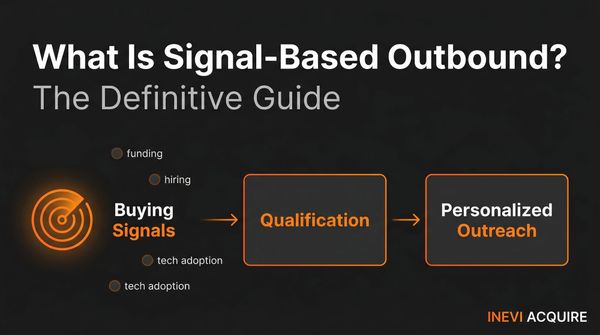
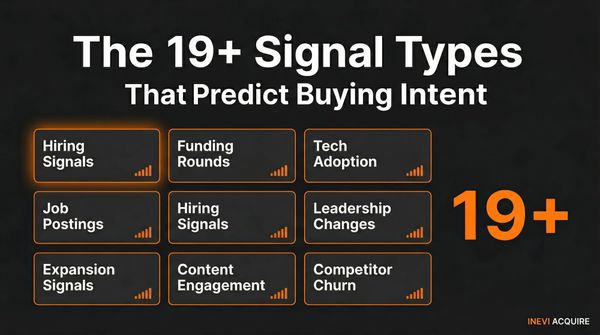
They use timing, not just targeting. Reaching companies that match your ICP is table stakes. Reaching them when they're actively in a buying window, because they just lost a vendor, hired a new leader, received funding, or showed intent signals, is what turns a 2-3% cold reply rate into a 20-28% signal-based reply rate (Woodpecker, 2025; signal-based outbound benchmarks).
They treat organic visibility as pipeline infrastructure. 61% of B2B buyers prefer a rep-free buying experience before they engage with a sales conversation (Gartner, B2B Buying Behavior Survey, 2025). If an agency is invisible in search when a prospect researches their category, that prospect never enters the pipeline at all. Content isn't a nice-to-have. It's the front door for the majority of buyers.
They measure compounding, not just activity. The question isn't "how many meetings did we book this month?" The question is "are our metrics improving month over month?" Reply rates going up. Meeting quality improving. CAC going down. If month six doesn't outperform month one, something structural is wrong.
The Referral Trap
Referrals are valuable. They're high-trust, high-conversion, and often the best leads an agency gets. None of what I've written here suggests referrals are bad.
But a referral network isn't a pipeline. A pipeline is predictable. A pipeline is controllable. A pipeline runs on your schedule, not on whether someone happens to think of you at the right moment.
The referral trap is the belief that because referrals have always worked, they'll always be enough. They work until the network contracts. They work until two referral sources go quiet in the same quarter. They work until the agency hits a revenue ceiling set by the founder's personal relationships, and no amount of great delivery pushes past it.
The agencies that grow past $3M, past $5M, past $10M are the ones that keep referrals as one channel and build a pipeline system that runs alongside them.
Frequently Asked Questions
What exactly is the cobbler's children problem in business?
The cobbler's children problem is a metaphor for professionals who provide services for others but neglect those same services for themselves. In agencies, it describes firms that build pipeline systems, outbound campaigns, and growth strategies for clients while relying entirely on referrals and founder-led hustle for their own growth.
Why do 79% of agencies have no dedicated BD resource?
The primary reason is resource allocation. Agency founders invest their capacity in billable client work rather than internal business development. When choosing between a paying client and a speculative pipeline activity, delivery always wins. Over time, this creates a structural dependency on referrals and personal networking.
How much revenue do agencies lose to the feast-or-famine cycle?
Services firms operating without a pipeline system typically see revenue swings of 30-40% quarter over quarter (Hinge Research Institute, 2024). Structural client churn, where two to three clients per year cycle off due to project completion, budget shifts, or natural engagement lifecycles, compounds the problem when there's no system replacing departures proactively.
Can agencies realistically build their own pipeline while running delivery?
It depends on capacity. The structural challenge is that pipeline development competes with delivery for the same resource: the founder's time. Agencies that succeed typically either hire a dedicated BD person (after establishing what messaging and channels work) or partner with an external firm that runs pipeline independently of the agency's delivery cycle.
What's the difference between a referral network and a pipeline?
A referral network produces opportunities based on other people's timing, memory, and conversations. It's valuable but not controllable or predictable. A pipeline is a system that generates qualified conversations on a consistent schedule, independent of whether someone happens to mention your name this month.
How long does it take to build a predictable agency pipeline?
With a dedicated system, agencies typically see initial qualified conversations within two to four weeks. Meaningful pattern data, where you know which signals, channels, and messaging produce meetings that close, usually emerges by month three. The compounding effect, where performance measurably improves month over month, is visible by month six.
Breaking the Cycle
The cobbler's children problem persists because it's structural, not because agency founders lack awareness. Every agency founder reading this has thought about building their own pipeline system. Most have started. Few have finished. Delivery always takes priority.
The question isn't whether you need a pipeline. You already know you do. The question is whether you'll build one before the next churn event, or after.
If you want to see what's already in motion in your market, run a free signal audit. It takes five minutes. You'll see the specific companies that match your target profile and are showing buying intent this quarter, the ones you'd be reaching if your pipeline were running today. No commitment. No sales pitch. Just data on what you're currently missing.
The pipeline you'd build for yourself, if you had the time, shouldn't require your time to run.
Costa Papanikolaou is co-founder of Inevi Acquire, a multi-channel client acquisition firm that builds compounding pipelines for B2B companies. He writes about the structural problems in agency growth and what the data shows about fixing them.
Related reading: - The Math of Compound Pipeline: How to Drop CAC by 30% in 6 Months - Timing > Targeting: How to Reach Buyers Before Your Competitors Do - What Good Actually Looks Like: The 2026 B2B Client Acquisition Benchmarks